ESAT Guides
ESAT Preparation: Your 6-Month ESAT Preparation Timeline
Written by: Matt Amalfitano-Stroud
Welcome to Exams.Ninja’s 6-Month Preparation Timeline for the ESAT.
The Engineering and Science Admissions Test (ESAT) is all about applying the maths and science you’ve already been learning at school, so there’s a good deal of ground to cover in the months before test day. Join us as we take you through the whole 6-month journey to securing your success in the ESAT. Let’s get started!
(Please bear in mind that this schedule is built around candidates sitting the ESAT in October. Those sitting in January can follow the same structure but should adjust the dates accordingly).
May
Understanding the ESAT Format
First things first: how does the ESAT actually work? Unlike a single-paper test, the ESAT is made up of separate modules, and it’s worth getting the basics down before anything else:
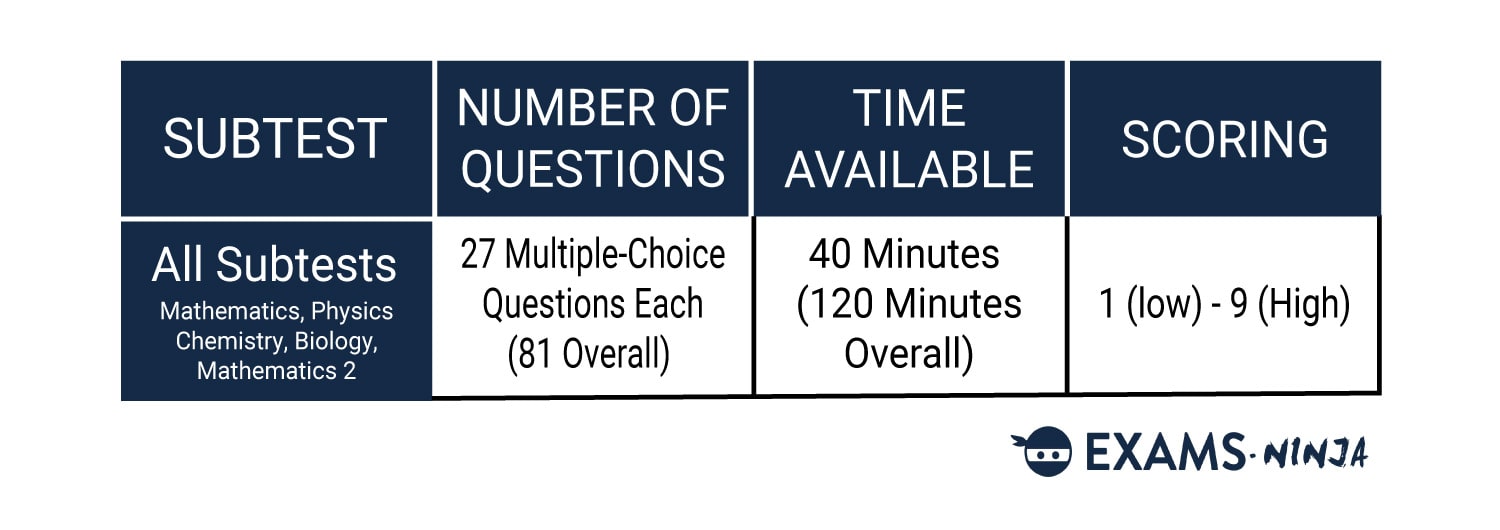
There are five modules in total: Mathematics 1, Mathematics 2, Biology, Chemistry and Physics. Every candidate sits Mathematics 1, and most sit two further modules on top of it. Each module lasts 40 minutes and contains 27 multiple-choice questions, so most candidates face around 120 minutes of testing in total. There’s no pass or fail, with each module instead being scored on a scale from 1 (low) to 9 (high), reported to one decimal place. Importantly, you don’t lose marks for wrong answers, so it’s always worth putting something down.
This is all fairly straightforward, but you’ll want to know more to feel truly confident. Starting with a bit of research is highly recommended. Take a look at the official ESAT specification and the specimen test on the UAT-UK website – the specimen runs on the same system as the real test, so it’s the best way to get a feel for the interface and the style of questions. As with any exam, hearing from former test-takers through videos, blogs and forums like The Student Room can also give you a valuable head start.
Choosing Your ESAT Modules
Here is where the ESAT differs from most other admissions tests, and where a surprising number of applicants trip up: you need to sit the right modules for your course.
- Everyone sits Mathematics 1, no exceptions.
- Most candidates then sit two further modules, chosen from Biology, Chemistry, Physics and Mathematics 2.
Some courses tell you exactly which modules you must sit; others give you a free choice. If you’re applying to two courses that both require the ESAT and one offers a free choice, you’ll need to sit the compulsory module for your other course. If two courses have genuinely conflicting compulsory requirements, don’t guess – contact UAT-UK through your online account for advice before you book.
And here’s the point worth committing to memory: you cannot change your modules after booking without cancelling and re-booking your test. Get it right the first time.
Exams.Ninja Tip
Before you do anything else, check the exact module requirements for your chosen course on the university’s own webpage. Whether you’re free to choose or your modules are effectively decided for you by your course, the responsibility to prepare for the correct ones is yours. Preparing hard for the wrong module is the single most avoidable mistake in the entire process – so make absolutely sure you know what you’re sitting.
Creating an ESAT Preparation Plan
Once you have a firm understanding of the ESAT and know which modules you’re sitting, it’s time to start preparing (or at least to prepare to prepare). The key to any successful revision is a plan, and we’d always recommend a structured timeline.
Six months is a long stretch, so you don’t need to account for every last second. Start with the immovable dates – school exams, UCAS deadlines, open days and anything else important – and note them down so your revision can work around them. From there, block out your dedicated preparation sessions. This isn’t about how you’ll revise just yet; it’s about knowing when. Be realistic, but make sure you’re genuinely giving yourself enough time.
Because the ESAT spans several subjects, your plan needs to divide time fairly across every module you’re sitting. It’s tempting to lean into your strongest subject, but a weak module can drag your overall profile down just as easily as a strong one can lift it.
Rushing almost always lowers the quality of your work, and revision is no different. Take a look at these two graphs:
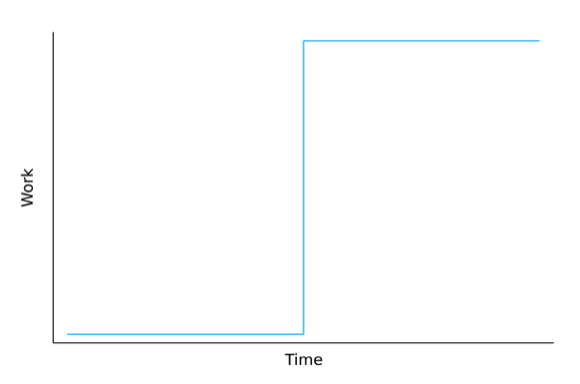
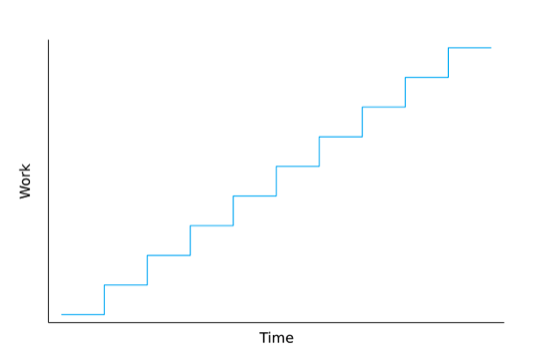
As you can see, you have two options: cram all your work into one short burst, or spread it out across the full stretch of time available to you. The first approach certainly has its uses for some tasks, but revision isn’t one of them.
The whole point of revision is to retain as much information as you can ahead of a set moment when you’ll need to put that knowledge to use. Rushing the process only shrinks how much you actually hold on to, which translates into weaker results when test day comes. You’ve got plenty of time before the ESAT, so spend it wisely and you’ll reap the rewards on your way to university!
One other thing that will be helpful is to take stock of any revision resources you have available. Beyond just your textbooks, this could include any websites you’ve found helpful, any classes you’re due to attend, or any question banks you have found. If you want to go the extra mile with your preparation, you could also invest in a preparation service to access even more resources. For example, the Exams.Ninja ESAT Preparation Platform grants you access to 220+ tutorials, 1,100+ practice questions and a collection of relevant past papers. All of that will definitely give your resource collection a boost!

June
Revision Begins
Now it’s time to start putting your plan into action.
By this point, you’ll have a solid grounding in maths and science from your school studies, and the good news is that the ESAT draws on exactly that – content you’re likely to have already met. The challenge isn’t unfamiliar material; it’s applying what you know quickly, accurately and under pressure, across multiple modules.
You may still be attending classes, so make the most of them by engaging with your teachers and taking good notes, particularly in the subjects that map onto your ESAT modules. Beyond that, you don’t need to be in full swing just yet – you’ve still got schoolwork to manage, so it’s sensible to wait for the summer holidays before your more intensive preparation begins.
Exams.Ninja Tip
For international students especially, check your school syllabus early. Some schools don’t teach certain topics until after the ESAT has been sat, which means you may need to teach yourself a few areas in advance. It’s more effort, but it could be the difference of a mark or two – and every mark counts.
Start with the Basics
Mathematics 1 sits at the heart of the ESAT – every candidate takes it, and strong mathematical fluency underpins the science modules too. So this is the place to begin. Work carefully through the specification and make sure there are no gaps in the basics; a shaky foundation here will quietly undermine everything built on top of it.
From there, move into the fundamentals of your chosen science modules. Read through each specification in detail and make sure you genuinely understand every point listed, rather than skimming the parts that feel familiar.
From our ESAT Expert:
The mistake I see most often is treating the ESAT as “just the science I already know.” The knowledge might be familiar, but the format isn’t. Sitting several timed, back-to-back multiple- choice modules is a very different experience from a normal school exam, and the people who underestimate that are the ones caught out on the day. Respect the format early, and it stops being intimidating.
July
Ramping up Revision
For most students, school finishes in July. It’s a chance to rest, but it’s also your best opportunity for some genuinely intensive ESAT revision. Your plan should already have set aside time for both work and rest, so lean into it.
So what should you actually do with the time? Maths and science aren’t subjects you can revise by reading alone. They’re built on methods and problem-solving, so the best way to prepare is simply to do. Work through as many problems as you can across every module you’re sitting. At this stage, it can help to answer more general (non-multiple-choice) questions, since these force you to build an answer from scratch rather than working backwards from options. If you can handle a problem with no choices in front of you, the multiple-choice versions become far more manageable.
Keep tracking your strongest and weakest areas as you go, module by module. Knowing precisely where you struggle lets you channel more time there – and through repetition, those weaknesses gradually become strengths.
From our ESAT Expert:
I kept a simple log of every topic I got wrong, sorted by module. After a few weeks, the pattern was obvious — I was fine on the physics but losing silly marks on Mathematics 1 under time pressure. Without that log, I’d have kept revising what I was already good at, because it felt more comfortable. Track your mistakes honestly, because they tell you exactly where to spend your summer.

Prepare for ESAT success with ESAT.Ninja
With the ESAT.Ninja Preparation Platform, you’re getting the most effective way to perfect your skills in time for the test. Sign up today for free to begin your ESAT preparation journey!
August
ESAT Practice Questions
Now it’s time to move on to genuine ESAT-style questions.
The ESAT is still a relatively new test, so build up a good selection of practice material – the specimen paper, past questions and dedicated question banks all help. Don’t race through them all at once, though; these are among your most valuable resources, so pace your use of them so you get the most from every question.
Remember that the ESAT is entirely multiple-choice. That format is a little more forgiving than traditional questions – you can work backwards or eliminate options – but don’t mistake that for the questions being easy. The difficulty is very much in the questions themselves.
Exams.Ninja Tip
Timing is everything in the ESAT. Each module gives you 40 minutes for 27 questions — that’s just under 90 seconds per question on average, and that’s before you leave any time to check your work. Don’t impose strict time limits at the very start of your revision, but as you grow more confident, start practising at pace. One tricky question can wreck your rhythm, so rehearse your timing until it’s second nature.
Extra ESAT Revision Tips
As the test gets closer and closer, you may begin to feel the stress of it all. Here are a few more things you can do to keep your revision on track:
Get into the habit of flagging questions now, since the chances are you’ll need to do exactly that in the real exam. Running into a question you simply can’t crack in the moment is perfectly normal, but forcing your way towards an answer does little good and eats up time that would be better spent elsewhere. Even so, always put something down regardless, just in case you never get the chance to return to it.
When your own efforts to understand something aren’t getting you anywhere, there’s no harm in turning to someone else for help. That might be a teacher, a mentor or a friend, anyone you trust to explain things in a way that makes sense to you. An online forum is worth a try, too. Plenty of people out there have been through exactly what you’re facing now and will have valuable advice on how to come out the other side.
Few things motivate quite like setting milestones for yourself! These might be anything from working through a certain number of questions or past papers to finally nailing that one type of question that’s been giving you the most trouble. As for rewards, let them be whatever you reckon will keep you following through on your tasks, though the finest reward of all is the sense of pride that comes with achieving something and, better still, with sailing through the ESAT!
Exams.Ninja Tip
The single biggest sin in ESAT preparation is reaching for a calculator. You won’t be allowed one (or a dictionary) in the test, so every time you use one in practice, you’re building a habit you’ll have to unlearn under exam pressure. Learn to handle arithmetic by hand from day one.
ESAT Registration
Registration is a key step you’ll want to get moving on early. You can create your UAT-UK account from the start of June, ahead of booking opening, and the test itself is booked through Pearson VUE. In broad terms:
1. Create your Pearson VUE account (this can be done before bookings open) and set up an account with Pearson VUE, providing the required personal details, including your full legal name.
2. When bookings open, confirm the test and select the correct modules for your course, then choose a test centre.
3. Pick an available date and time at your chosen centre. Slots are limited, so book as early as you can.
4. Confirm everything is correct and submit. You should receive a confirmation email with all the relevant details.
Book well before the deadline, as you never know what delays might crop up. If you have any access requirements or need a modified paper, contact Pearson VUE customer services to arrange this.

September
Taking ESAT Specimen And Past Papers
Test day is getting closer, so it’s time to sharpen your technique. Whatever practice papers you have, treat them exactly like the real thing: quiet room, strict timing, no calculator, no interruptions.
Your first few attempts probably won’t go as well as you’d hope, which is completely normal, and it’s precisely why you practise. Through repetition, you’ll learn from your mistakes and settle on an approach that works for you across each module.
- Keep a constant eye on the clock, module by module.
- Stay aware of your weaknesses so you can iron them out before the real thing.
- If a question really won't come, move on. Never sacrifice easy marks elsewhere for one stubborn question, but always put an answer down, since there's no penalty for a wrong guess.
- Use the multiple-choice format to your advantage by working backwards or eliminating options.
October
UCAS Application Deadline
For Oxford and Cambridge applicants, your UCAS application and personal statement are due by the 15th of October deadline – just before the October ESAT window. You can (and should) submit earlier, so make sure your plan accounts for the time needed to get these to a high standard. A late or rushed application can undo all of this revision, so don’t let it slip.
Final Weeks of Revision
You’re now into the final countdown. These last weeks are your chance to consolidate:
Running low on practice material? Because the ESAT draws on standard maths and science, past papers from related exams can serve as extra practice. These include the TMUA, as well as discontinued tests like the NSAA and ENGAA. Just remember the questions will differ in subtle ways, so treat them as general practice rather than the real thing.
Return to the weak spots you’ve been logging all summer. Re-read the underlying principles, then test yourself again to see if it’s finally clicked.
Keep everything outside your preparation as calm as possible. This is a busy time of year, with UCAS deadlines and schoolwork competing for attention, so manage your breaks well and watch your energy levels. If you feel close to burning out, build in small rewards to keep yourself going.
ESAT Testing Day
Exams.Ninja Tip
This is the day it all pays off. In the day or two beforehand:- Be sure that you are going on the correct date for 2026.
- Get a proper night's sleep before the test.
- Plan your route to the centre and allow for delays.
- Take everything you need, including your ID.
- Arrive early enough to sign in and settle before you begin.
Don’t leave anything to chance – one avoidable slip on the day can affect your whole application.

A final word from our ESAT expert:
The ESAT rewards preparation more than raw talent. It’s built from material you already know, which fools people into thinking they can wing it – but the format, the timing and the multi-module structure all take practice to master. If you’ve put in the months, done the specimen papers under real conditions and stayed on top of your weaker modules, you’ll walk in knowing you’ve done everything you could. That confidence is worth a lot on the day.
This brings us to the end of our preparation timeline. Your admissions journey isn’t quite over – you’ll still need your results to feed into your application, and if you’re applying to Oxford or Cambridge, interviews may follow.
There’s no single “correct” way to prepare; it comes down to how you learn and study best. As long as you’re putting in the time and effort across every module you’re sitting, you’re improving your chances of success. Whatever comes next, we wish you the very best of luck with your application!
It’s time to start thinking about your ESAT Preparation!
When you sign up to the ESAT Preparation Platform, you’re signing up for loads of amazing resources to help you get through your ESAT prep with ease! Your upgraded account will get you instant access to all of these great features:
Training Temple- Explore over 220 expert tutorials covering everything you need to know about the ESAT, as well as plenty of exam tips and tricks!
Practice Dojo- Test your maths skills with over 1,100 practice questions from each section of the ESAT. Learn from your mistakes with our fully worked solutions so you’ll get it right next time!
Exam Arena- The final challenge! Take on our collection of ESAT practice papers and see how you do in simulated exam conditions, complete with an accurate score at the end!
Sign up today to try the ESAT Preparation Platform for free!